Dancing is one of the most physically demanding disciplines in the world. Rehearsal schedules that rival professional athletes, repetitive movement patterns performed thousands of times, and the added pressure of making it all look effortless. When a dancer gets hurt, or wants to stay healthy, the stakes of finding the right physical therapist are unusually high.
Not every PT is equipped to work with dancers. Understanding what makes physical therapy for dancers different, and knowing what to look for in a provider, can save a lot of time and help your dancer get back to what they love faster.
A Dancer's Body Has Unique Clinical Demands
The physical demands of dance are unlike most other activities a PT encounters in general outpatient practice. Turnout mechanics place specific loads on the hip external rotators and labrum. Pointe work shifts force through the foot and ankle in ways that require clinical understanding of ballet-specific biomechanics. Core stability for turns, extensions, and aerial work is different from the kind of core strength a runner or soccer player needs.
A general PT who has primarily treated athletes or office workers may not immediately recognize the difference between a normal dancer's range of motion and one that signals a problem. What looks like hypermobility in another context may be functionally normal for a trained dancer. What feels like minor discomfort before a performance may be the early sign of a stress fracture if you know what to look for.
Dance injuries, whether an ankle sprain, a hip impingement, or a stress reaction in the foot, are best treated by clinicians who understand the movement patterns that caused them and the performance demands your dancer will return to.
What Dance-Specific Physical Therapy Actually Involves
A good dance physical therapist does more than treat the immediate injury. The clinical picture includes the dancer's current training load, their upcoming season schedule, the specific demands of their dance style, and any movement patterns that may have contributed to the problem in the first place.
At Bravo Physio in Frisco, TX, every evaluation for a dancer starts with that full picture. The team uses DARI Motion Capture technology to create an objective baseline of a dancer's movement patterns, which means treatment and conditioning programs are built on clinical data rather than guesswork. If a dancer comes in with hip pain mid-season, the goal is not just to resolve the pain but to identify the movement dysfunction contributing to it and correct it, so the same problem does not appear in a different form three months later.
Dance injury prevention is just as important as injury treatment. Many dancers benefit from working with a PT before something goes wrong, during the off-season or in the weeks leading into a new dance season, to address the movement inefficiencies that tend to become injuries under high training load.
The Value of a Provider Who Has Danced
There is a meaningful difference between a PT who has read about dance biomechanics and one who has lived it. Clinical knowledge and lived experience in the same clinician is rare, and it changes the quality of the care.
Dr. Travis Morrison, PT, DPT, FAAOMPT, danced professionally with Colorado Ballet and City Ballet San Diego before earning his fellowship training in orthopedic manual therapy. When he assesses a dancer's hip mechanics or discusses training load with a pre-professional student, he is drawing on both clinical expertise and a career spent in the same demanding environment. Dr. Julia Buckelew, PT, DPT, OCS, has accumulated more than 200 hours of dance-specific continuing education and teaches dance kinesiology as an Adjunct Professor at SMU's Meadows School of the Arts. She serves as staff PT for multiple DFW dance companies.
For dancers in the Dallas and Frisco area, access to this level of combined clinical and dance expertise in a single boutique practice is genuinely uncommon.
When Virtual PT Makes Sense for Dancers
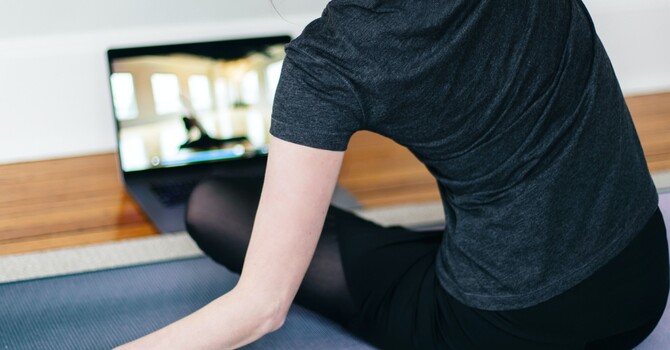
One of the more significant developments in physical therapy for dancers over the past several years is the expansion of telehealth physical therapy as a legitimate and effective option for many presentations.
For dancers who are away at summer intensives, traveling for competitions, or based in an area without access to a dance-specialized PT, virtual sessions offer a way to receive real clinical guidance without waiting until they are back home. A virtual evaluation with a qualified dance physical therapist can clarify what is happening, provide an exercise program, and help a dancer manage their body through a high-stakes period, whether or not there is an injury involved.
Bravo's team has treated dancers virtually with no prior in-person relationship, including dancers mid-program at summer intensives in other states who needed clinical support without the risk of raising a concern with on-site staff. Telehealth PT is not a substitute for every situation, but for the right presentation, it is a powerful tool.
How to Find the Right Dance Physical Therapist
When looking for a dance physical therapist near you, a few questions worth asking:
Does the PT have specific training or experience in dance medicine? General sports medicine experience is a good foundation but is not equivalent to dance-specific training. Ask whether they have worked with dancers at a pre-professional or professional level, and whether they have continuing education in dance biomechanics.
Do they understand the demands of your specific dance style? A PT experienced with ballet may not have the same depth of knowledge about contemporary technique or hip-hop movement patterns. Ask specifically about the style your dancer trains in.
Will they work within your training schedule, not around it? A good dance PT understands that telling a competitive dancer to stop for six weeks is not always a realistic or complete answer. Treatment plans should account for the season, the upcoming performances, and the practical reality of your dancer's training commitments.
Do they offer telehealth if needed? Especially for dancers who travel or train at remote programs, access to a telehealth-capable provider means care does not have to stop when the dancer is away from home.
When to Book an Intro Call
If you are unsure whether Bravo is the right fit for your dancer's situation, the best starting point is a free intro call. In 15 minutes, Dr. Julia can hear what is going on, ask the right questions, and give you a clear sense of whether physical therapy, wellness, or another service is the right next step. No commitment required.
Bravo Physio serves dancers across Frisco, Dallas, Plano, Allen, McKinney, and the greater DFW area. For dancers who are away from home, virtual sessions are available across Texas.
References
- Bronner S, Ojofeitimi S, Mayers L. Comprehensive Surveillance of Dance Injuries: A Proposed Surveillance System for Dancers. Journal of Dance Medicine and Science. 2006. https://journals.humankinetics.com/view/journals/jdms/10/3-4/article-p69.xml
- Russell JA. Preventing Dance Injuries: Current Perspectives. Open Access Journal of Sports Medicine. 2013. https://www.ncbi.nlm.nih.gov/pmc/articles/PMC3871929/
- Hincapié CA, Morton EJ, Cassidy JD. Musculoskeletal Injuries and Pain in Dancers: A Systematic Review. Archives of Physical Medicine and Rehabilitation. 2008. https://www.archives-pmr.org/article/S0003-9993(08)00004-7/abstract